Diclofenac masked the pain and damaged your stomach. The ergonomic chair accommodated the weakness without fixing it. The back support belt did the work your muscles should have been doing and made them weaker. Physiotherapy exercises worked in the clinic and failed at the desk because nobody built them into a sustainable daily routine. Everything you tried managed the CONSEQUENCE of switched-off muscles without switching them back on. You just chose the method that switches them on: 10 minutes daily, 3 micro-resets at your desk, and the anti-inflammatory support that calms the compression the sitting created.
21 days. The muscles hold. The spine calms. The stand-up stops being a moment.
🦴 "My spine is not the problem. The muscles that hold my spine are the problem. They switched off from years of sitting. Papa Okechukwu's method switches them back on. The muscle reactivation protocol fires the deep stabilisers that have been dormant. The movement resets keep them firing through the sitting day. The anti-inflammatory preparation calms the compression damage. In 21 days, I stand from my chair without bracing. I pick up my child without seizing. I walk out of the office moving like a 38-year-old, not a 68-year-old. The diclofenac stays in the drawer."
Your Complete Remedy Is Ready
Click the button below to download the full remedy and both bonus guides instantly.
Download Your Guides Now🦴 Here's What You Got
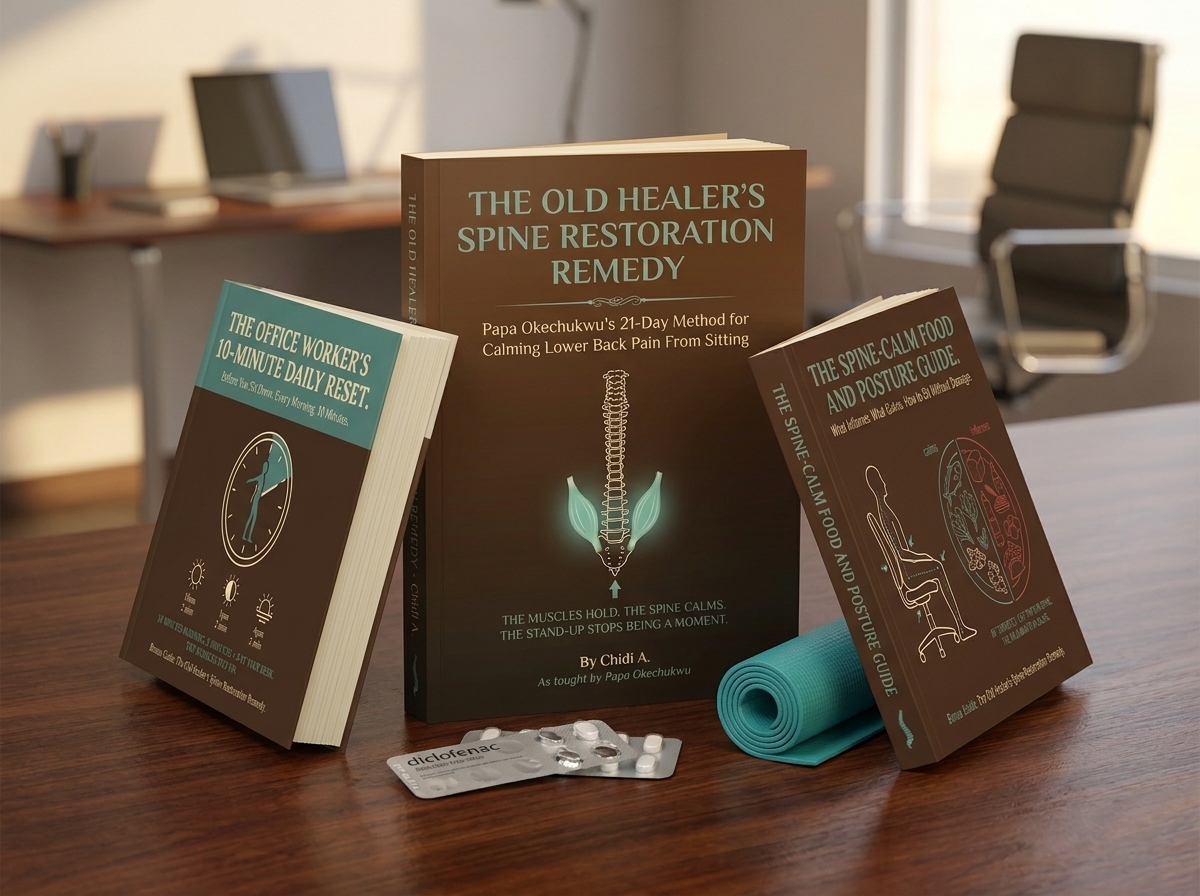
Papa Okechukwu's complete 3-part method: muscle reactivation protocol (10 min daily, targets deep stabilisers — multifidus, transverse abdominis, pelvic floor), anti-inflammatory spine preparation (twice daily, market ingredients, under ₦2,000/month), and movement reset (2-minute micro-sessions at your desk, 3x daily). Day-by-day for 21 days. No gym. No equipment
The complete daily exercise programme on a single printable page. Each exercise illustrated with technique verification. Progressive difficulty across 21 days. Week 1: neural activation. Week 2: strength building. Week 3: full stabilisation. Pin it beside your desk
10 Nigerian foods that increase spinal inflammation vs 10 that support recovery. The correct sitting posture for non-ergonomic Nigerian office chairs. The 3 free micro-adjustments to your current chair. The evening spine decompression routine (5 min before bed)
Your First 48 Hours
Download Everything Now
Tap the button above. Save all 3 files to your phone. You'll reference the main remedy and the Daily Reset every morning.
Read the Spine-Calm Food and Posture Guide Tonight (Bonus #2)
Start here FIRST. Open Bonus #2 and check the 10 inflammatory foods against what you ate today. Many Nigerian office workers consume pro-inflammatory foods daily without connecting them to back pain: excess refined carbohydrates, certain processed cooking oils, and specific snacks that are staples in Lagos office culture. Removing these tonight begins reducing the chronic low-grade inflammation in your L4-L5 region before the exercises have had time to build strength. Then check the 3 free chair micro-adjustments and apply them to your office chair tomorrow morning. These cost nothing and reduce spinal compression immediately.
Print the 10-Minute Daily Reset (Bonus #1)
Print it tonight or first thing tomorrow. Pin it beside your desk or on your bedroom wall. This is your daily programme for 21 days. Each exercise is illustrated with technique verification so you know you are activating the correct deep stabiliser muscles, not the superficial muscles that general "core work" targets.
Read the Main Remedy in Full
Read the complete method before beginning Day 1 so you understand WHY each component works. Understanding that the deep stabilisers are different from "abs," that the movement resets prevent the muscles from switching off during the sitting day, and that the anti-inflammatory preparation addresses compression damage — this understanding keeps you consistent when Day 5 arrives and the stand-up is still stiff.
Begin Day 1 Tomorrow Morning
10-minute muscle reactivation protocol before you leave for work (Page 9 of the main method). Anti-inflammatory preparation twice daily (Page 14). Movement resets at 10am, 1pm, and 4pm at your desk (Page 17). All three components begin simultaneously. The 2-minute desk resets are invisible to colleagues — they look like simple stretching.
Do NOT Stop the Diclofenac Immediately
Continue taking diclofenac as needed during Week 1. The muscles have been switched off for years. They do not reactivate in 3 days. By Day 8-10, most people notice the stand-up becoming slightly less stiff. By Day 12-14, the 3pm pain peak reduces enough that you begin skipping the diclofenac naturally — not because you forced yourself to stop, but because the pain no longer demands it. Let the reduction happen naturally as the muscles take over.
🦴 What to Expect Over 21 Days
⚡ Do This Right Now
Open the Spine-Calm Food and Posture Guide (Bonus #2) and go to "The 3 Free Chair Adjustments."
These are 3 changes you can make to your CURRENT office chair — no new equipment needed, no cost — that reduce spinal compression during sitting. The first is seat height: most Nigerian office chairs are set too low, which tilts the pelvis backward and increases L4-L5 compression. The correct height positions your hips slightly ABOVE your knees, which tilts the pelvis forward and opens the lumbar curve. Adjusting this one setting tomorrow morning changes the compression pattern for every hour you sit. The other two adjustments are equally simple and equally free. Do all three before your first meeting tomorrow.
"The spine is not the problem. The muscles that hold the spine are the problem. Switch the muscles back on and the spine holds itself."

🦴 21-Day Conditional Guarantee
Follow the method consistently for 21 days. If you don't notice meaningful reduction in lower back pain and improved ease of standing, full refund. You keep both guides regardless.
Need Help?
Questions about the activation exercises, the desk resets, the preparation, or anything at all? We understand the chair. We've sat in it ourselves.